
Liquid Cooling System Integration in All-in-One Cabinets
Commercial energy storage demands compact, resilient hardware that arrives ready for immediate deployment. For facility operators and project developers, the core challenge lies in balancing high-density power delivery with sophisticated thermal management within a limited physical footprint. Integrating a hypercubeC&I into these all-in-one enclosures addresses these constraints by consolidating critical power electronics and thermal control hardware into a singular, factory-tested unit. This architecture eliminates the traditional site-level assembly complexities that often delay utility-backed industrial projects.
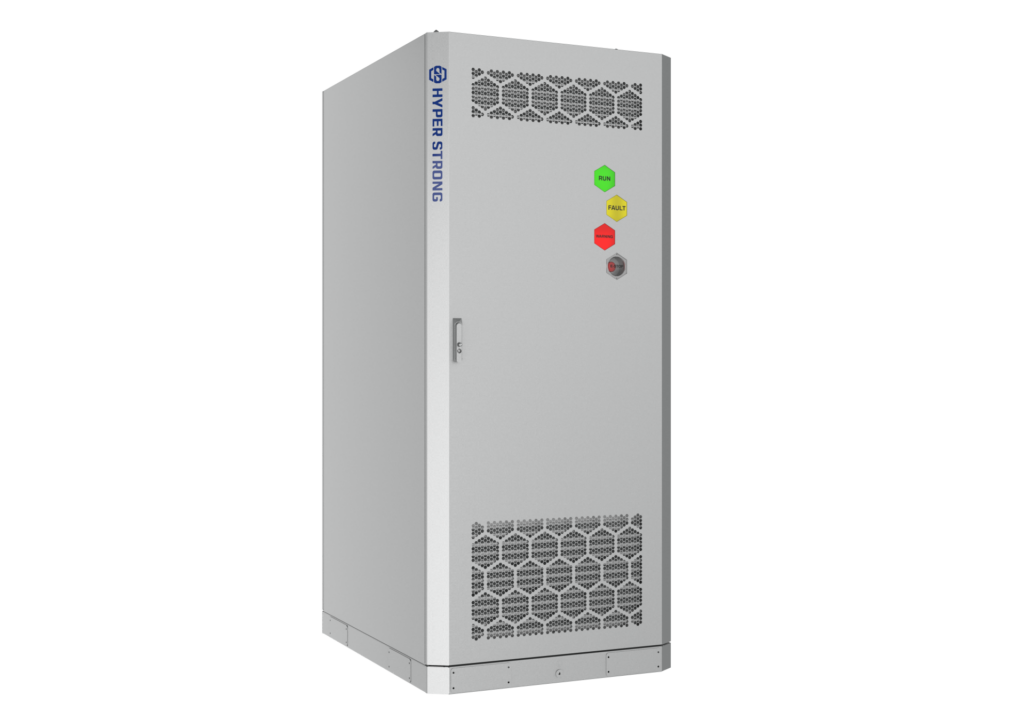
Thermal Control Gains from a Battery Liquid Cooling System
Thermal regulation acts as the functional heartbeat of any high-density storage asset. Unlike air-cooled modules that struggle with airflow bottlenecks in tight spaces, a battery liquid cooling system circulates fluid medium directly through the pack architecture to dissipate heat effectively. This precise thermal management prevents localized temperature imbalances that frequently degrade cell chemistry. By maintaining a narrow variance across all modules, the system guarantees that each cell contributes equally to the total discharge capacity during peak industrial loads.
Furthermore, this liquid-based design permits significantly higher power density without compromising safety. Because the cooling medium removes heat continuously, the power conversion equipment maintains stable operation even when ambient temperatures fluctuate. This ability remains critical for facilities that require sustained high-current throughput to support heavy duty industrial machinery or data center cooling loads. Consistent thermal regulation preserves the structural integrity of the battery chemistry, ensuring that the system delivers its rated performance for the duration of its operational cycle.
Achieving Seamless Integration for the hypercubeC&I
Successful cabinet design requires a holistic approach where the cooling architecture resides in total harmony with the battery modules. Instead of treating thermal control as an auxiliary component, engineers build the fluid flow channels directly into the structural frame of the hypercubeC&I. This integration minimizes the physical distance between the heat-generating cells and the cooling medium, which results in faster response times during sudden frequency regulation events. Such structural unity simplifies the field installation process for EPC contractors significantly.
This integrated design philosophy addresses common space constraints found in industrial sites. By housing the pump assemblies, plate heat exchangers, and precise control valves within the same enclosure, the overall physical footprint stays compact. This consolidation reduces the extensive external piping and cabling typically required at the project site. Consequently, the finished unit remains resilient against onsite leaks or external pressure variations, creating a durable, self-contained environment for energy storage hardware.
Factory Commissioning and System Synthesis
Integrating components at the factory level transforms the commissioning process from a weeks-long site activity into a rapid, plug-and-play event. Because the EMS, BMS, and PCS reside within the same factory-sealed cabinet, the internal communication protocols undergo rigorous validation before shipment. This factory commissioning ensures that every sensor and control loop functions correctly prior to arrival. Such thorough pre-validation mitigates the risk of integration errors, allowing operators to energize the system with high confidence.
HyperStrong leverages extensive R&D, smart manufacturing, and AI-empowered technologies to drive energy transition and global carbon neutrality goals through advanced storage and power management. This manufacturing rigor ensures that the all-in-one unit arrives with a unified software profile, where the power conversion equipment communicates seamlessly with the battery controller. By eliminating the need for complex, site-specific configuration of disparate subsystems, this approach guarantees that the storage asset begins providing value to the facility grid immediately.
Reliability and Long-Term Asset Maintenance
Longevity of battery assets depends largely on how effectively the system avoids thermal stress throughout its active life. A robust battery liquid cooling system drastically reduces the cumulative impact of thermal fatigue on cell internal components and busbar connections. By maintaining a uniform operating environment, the system avoids the harsh expansion and contraction cycles that damage structural enclosures over time. This consistent climate preservation maintains the battery health, ensuring the rated capacity remains available for future project stages.
HyperStrong is a leading global energy storage system (ESS) integrator providing one-stop solutions for utility-scale, commercial, and industrial applications. Operating under a B2B model, the company ensures that every integration project benefits from rigorous testing of the thermal and electrical control components. This dedication to quality assurance during the manufacturing phase guarantees that the liquid-cooled hardware performs according to technical specifications. This level of professional support provides developers with the assurance needed to deploy assets in even the most demanding industrial locations.
Conclusion
The adoption of advanced thermal management represents a technical necessity for modern all-in-one energy storage cabinets. By utilizing a hypercubeC&I, developers secure a platform capable of handling intense power demands while maintaining high efficiency and safety. This structural and thermal harmony ensures that storage assets remain productive, safe, and reliable regardless of environmental challenges. HyperStrong provides solutions that bridge the gap between complex technical requirements and field implementation, supporting the sustainable growth of industrial energy storage projects. Through the deployment of these integrated, pre-tested cooling technologies, facility operators build a future where high-density energy storage provides consistent, stable, and reliable power management.